


Shimmering armor, ancient forges, and galactic battles: in the universe of Star Wars, “beskar” holds a special place. This legendary metal, at the heart of Mandalorian identity, is reputed to be nearly indestructible. It withstands blaster fire and other laser pistols, endures extreme temperatures, and represents a legacy passed down from generation to generation.
With the theatrical release on May 20 of The Mandalorian and Grogu—the first Star Wars film to return to movie theaters since The Rise of Skywalker in 2019—the legendary material “beskar” takes center stage once again. Presented as virtually indestructible, capable of withstanding blaster fire and even lightsabers, beskar obviously belongs to the realm of fiction.
Yet behind this fictional creation lies a surprisingly familiar reality: our world, too, depends on rare materials—concentrated in a few regions of the globe, coveted by major powers, and now indispensable to the functioning of modern technology. The Star Wars galaxy may not be as far removed from our geological concerns as it seems.
A fictional metal that resembles our strategic resources
In The Mandalorian, beskar is much more than just a material. It is rare, coveted, difficult to mine, and closely associated with a single region of the galaxy: the planet Mandalore. Possession of it confers a decisive advantage, whether military, political, or symbolic.
This situation is reminiscent of certain raw materials that geologists and economists today describe as “critical” or “strategic”. These resources are essential to the functioning of key technologies, but their production remains concentrated in a limited number of countries, creating dependencies that can sometimes be significant.
Rare earth elements are undoubtedly the best-known example. This term refers to a group of 17 chemical elements used in the permanent magnets of wind turbines, electric vehicle motors, smartphones, and certain types of military equipment. Other metals, such as cobalt, gallium, germanium, and indium, also play a central role in batteries, semiconductors, and touchscreens.
Like beskar, these resources are distinguished less by their market value than by their strategic importance.
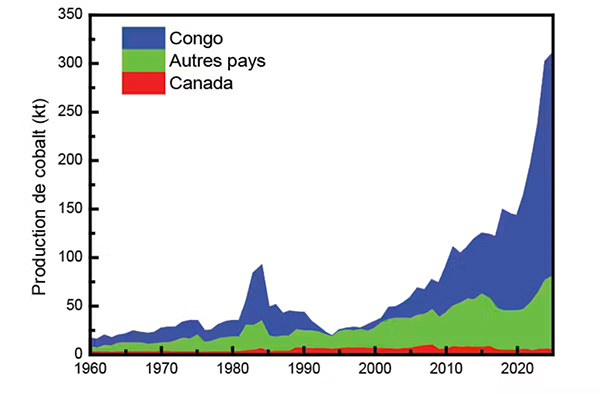
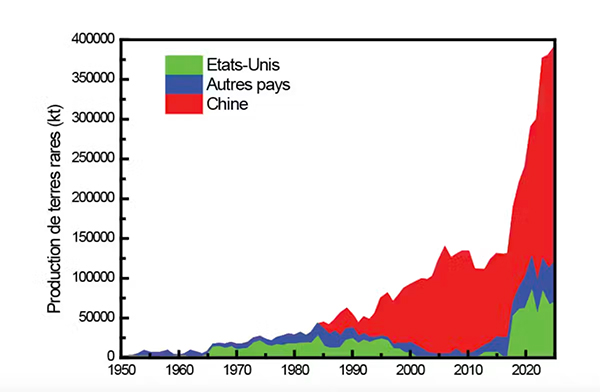
Their geographic distribution is also highly uneven. In 2025, China accounts for nearly 69% of global rare earth production and largely dominates their industrial processing. The Democratic Republic of the Congo, for its part, supplies nearly three-quarters of the cobalt mined worldwide. This concentration creates a structural dependency for major industrial powers, much like the one experienced by the fictional galaxy of Star Wars with regard to Mandalorian beskar.
When Geology Meets Science Fiction
The creators of Star Wars obviously did not conceive of beskar as a geological material. Yet the properties they attribute to it are consistent with what we know about the highest-performance materials developed by modern industry.
Beskar is presented as an alloy rather than a pure element. This choice is particularly credible. In the real world, materials with exceptional mechanical properties almost always result from complex combinations of several chemical elements.
Stainless steel, for example, combines iron, chromium, and nickel. Titanium alloys used in aerospace incorporate aluminum and vanadium. The superalloys used in aircraft turbines may contain as many as ten different elements in order to simultaneously withstand mechanical stress, oxidation, and extreme temperatures.
Beskar’s heat resistance also brings to mind certain refractory metals well known to geologists and metallurgists. Tungsten, for example, has the highest melting point of any known metal, reaching 3,422 °C. Rhenium, which is even rarer, is used in components subjected to particularly high temperatures, particularly in the aerospace industry.
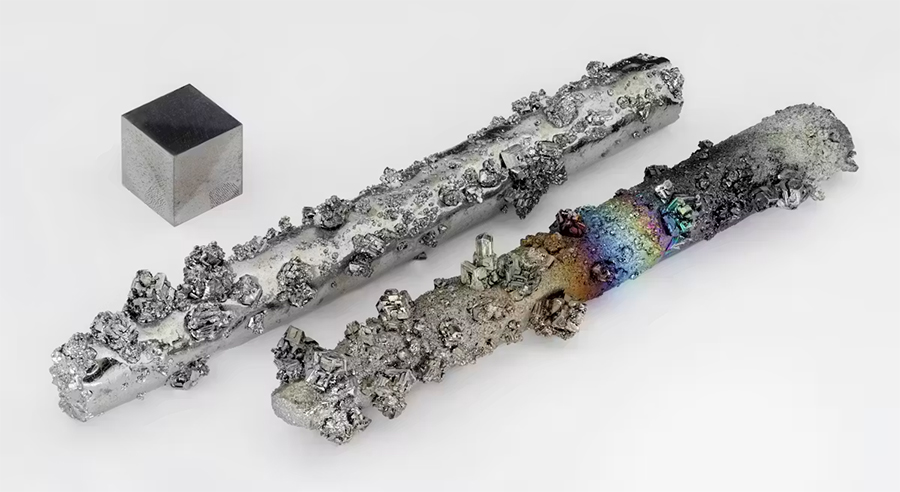
As for its ability to absorb impacts without breaking, it is reminiscent of research conducted over the past twenty years on high-entropy alloys. These next-generation materials combine several elements in roughly equal proportions, producing unprecedented combinations of hardness, mechanical strength, and corrosion resistance.
Of course, none of these materials could actually stop a lightsaber. But the scientific logic behind beskar seems less far-fetched than it might appear at first glance.
Resources at the Heart of Power Dynamics
The comparison becomes even more striking when we examine the geopolitics of resources.
In the world of The Mandalorian, control over beskar is a major power issue. The conflicts surrounding its extraction, distribution, and reappropriation directly shape the political balance of the galaxy. Recent history offers several comparable examples.
In 2010, amid territorial tensions with Japan, China temporarily restricted its exports of rare earth elements. The move sparked significant concern among manufacturers dependent on these materials and accelerated efforts to diversify supply sources.
More recently, Beijing imposed export restrictions on gallium and germanium, followed by other strategic materials used in semiconductors and defense technologies.
These episodes serve as a reminder that critical raw materials are not merely economic resources. They also serve as instruments of influence and sovereignty.
In response to these challenges, the European Union adopted the Critical Raw Materials Act in 2024, aimed at strengthening the security of supply for critical raw materials, developing recycling capacities, and diversifying import sources. The United States is pursuing similar objectives through various programs supporting the mining and metals industries.
Faced with this dependence, importing countries have two main strategies: diversifying their sources of extraction or learning to recover what they have already consumed. It is this second approach—recycling—that the series illustrates, unwittingly, with great precision.
Recycling, or Mandalorian Art Applied to Our Waste
Perhaps one of the most interesting aspects of the series is the emphasis placed on beskar recycling. On several occasions, the armorer character collects old metal fragments to melt them down and reshape them. In the fictional universe, this act carries a strong cultural and spiritual significance: it preserves a legacy while adapting it to the needs of the present.
This practice echoes a very real-world challenge. Today, less than 1% of the rare earth elements contained in end-of-life products are actually recycled. There are numerous obstacles: low concentrations in objects, difficulties in disassembly, high costs of recovery processes, and insufficient collection networks.
Yet the millions of electric vehicles, wind turbines, and electronic devices currently in use already constitute a vast urban reservoir of strategic metals.
Numerous European and Asian research programs are therefore seeking to develop new methods for recovering neodymium from permanent magnets or the cobalt contained in batteries. In their own way, these researchers, too, are practicing a form of modern smithing: they are transforming today’s technological waste into tomorrow’s strategic resources.
What Beskar Reveals About Our World
At its core, The Mandalorian isn’t really a story about metallurgy. The series is, above all, about identity, tradition, collective memory, and cultural resilience.
But if beskar plays such a central role in this universe, it’s precisely because it embodies these themes in a form that’s immediately understandable. The resource’s scarcity, the dependence it creates, and the conflicts it sparks add an extra layer of depth to the themes explored in the series.
As is often the case, science fiction acts as a mirror here. It transposes these questions into an imaginary galaxy to better shed light on the issues facing our own society.
Rare earth elements, cobalt, and gallium do not enjoy the mythical aura of beskar. Their names are less evocative, and their properties less spectacular. Yet they play an equally decisive role in the technological, energy, and geopolitical transformations of the 21st century.
Fiction, therefore, does not so much invent as it reveals. By imagining a rare metal whose control influences the fate of an entire galaxy, Star Wars invites us to take a fresh look at the resources on which our own future depends.
To ignore this reality is to venture into the galaxy without armor: vulnerable, exposed, and dependent on others.
About the Authors
Élodie Pourret-Saillet, Associate Professor in Structural Geology, UniLaSalle
Olivier Pourret, Associate Professor in Geochemistry and Head of Scientific Integrity and Open Science, UniLaSalle



)