Healthy soils for tomorrow's world
Choose to take action where it all begins
Healthy soils for a sustainable future
Soils are home to 25% to 50% of known species. They are a fragile and non-renewable resource on a human scale. Their good “health” is essential for ecosystems, biodiversity, climate regulation, food production, and water regulation.
Currently, 60% of the world’s soils are degraded (erosion, salinization, contamination), and a portion continues to disappear each year due to increasing land conversion.
As they become a scarce resource, soils and associated subsoils are also becoming objects of desire, land-grabbing strategies, and conflicts.
This trend impacts global food and energy supplies, the well-being of billions of people, and could trigger forced migration while posing a threat to peace.
Protecting soils is a societal choice and a responsibility toward future generations.
The UNESCO Chair in “Soils, Biodiversity, and Future Generations” was established out of a firm conviction that soils must be recognized and protected as a global common good, central to addressing ecological, climate, and social crises.
A unique and collective ambition
A central, interdisciplinary, and universal question
In the context of climate change, what sustainable soil management practices would enable societies to adapt to these transitions and preserve biodiversity?
To address this question, the Chair takes a resolutely interdisciplinary approach, combining:
- Soil Science and Ecology
- Economics, Law, Sociology, and Regional Planning
- Academic knowledge and practical field experience.
This integrated approach enables the Chair to contribute to the achievement of the Sustainable Development Goals (SDGs) of the United Nations 2030 Agenda.
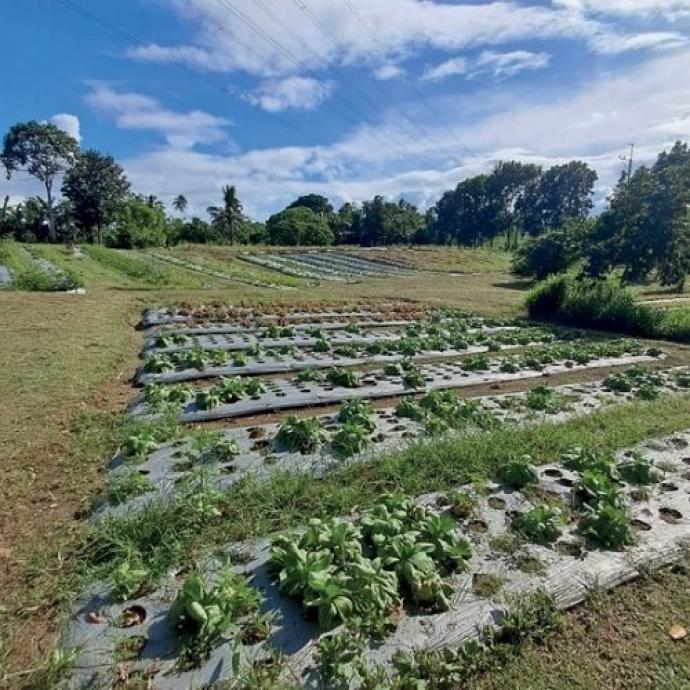
Objectives of the Chair
The UNESCO Chair in “Soils, Biodiversity, and Future Generations” has four main objectives:
- To strengthen knowledge and propose solutions for sustainable soil management in the face of threats linked to human activities, particularly urban expansion, contamination, and certain agricultural practices, across various soil-climate and societal contexts;
- To educate a new generation that is aware of and responsible for the importance of soils and their biodiversity, by promoting and making careers related to their preservation attractive;
- Empower stakeholders to recognize the essential value of soils and the urgency of their protection in order to positively influence public policies and their practical implementation;
- Cooperate closely with UNESCO, other UNESCO Chairs, and UNITWIN networks on relevant programs and activities
A unique approach
The Chair’s unique character is based on:
- A fundamental area of study at the intersection of global challenges,
- A multi-stakeholder approach rooted in diverse soil-climate and socioeconomic contexts,
- An international digital platform that facilitates knowledge sharing.
An international network already committed
From its launch phase, the Chair has brought together higher education institutions, research centers, and socio-economic stakeholders in seven countries across four continents: France, Colombia, Mexico, Brazil, Tunisia, Senegal, and the Philippines.
Each model region focuses on a specific theme related to local challenges (contamination, water resources, salinization, etc.).
It works to raise awareness, experiment, compare, and disseminate sustainable soil management practices, promoting North–South and South–South cooperation.
This effort is facilitated by the LaSallien network, the world’s leading educational network.
Concrete and measurable impacts
Structuring deliverables to:
- Collectively develop and deploy observation and decision-support tools to preserve soil
- Educate younger generations through innovative systemic approaches
- Raise awareness among citizens and stakeholders through participatory workshops
- Strengthen an international network through the ILIASS (International Lasallian Institute of Applied Sciences for Sustainability) collaborative platform
“One long-term goal is to improve the condition of the world’s soils”
The chair’s activities are evaluated using specific indicators: the number of outreach initiatives, stakeholders trained, decision-making tools, the need to preserve soils in public policy as a biodiversity asset, etc.
Stakeholders
UniLaSalle
UniLaSalle is a polytechnic institute renowned for its engineering and veterinary programs and its expertise in the life sciences, earth sciences, environmental sciences, digital technology, and energy. Deeply committed to the ecological, food, energy, and regional transitions, it trains professionals capable of addressing the major challenges of the future.
UniLaSalle is a member of the global La Salle network, which comprises 1,100 institutions and 64 universities in 80 countries.
Research at UniLaSalle serves as a major driver of innovation and transformation, led by interdisciplinary teams dedicated to developing sustainable scientific solutions to societal challenges and transitions. To this end, the Institute relies on five multi-site research units focusing on agroecology, land use planning, the circular economy, the links between environment and health, and geological resources for the energy transition.
Jean-Baptiste Gagne Foundation - UniLaSalle
The Jean-Baptiste Gagne - UniLaSalle Foundation, recognized as a public-interest organization (FRUP), acts in the name and on behalf of the UniLaSalle Polytechnic Institute, and is dedicated to the advancement of higher education, research, and continuing education for the benefit of UniLaSalle, a private higher education institution of public interest (EESPIG).
UNITWIN Program / UNESCO Chairs
The “UNITWIN/UNESCO Chairs” Program aims to strengthen international cooperation and knowledge sharing among universities and research institutions. It supports the creation of academic networks that promote excellence in teaching, research, and innovation, in the service of sustainable development, peace, and intercultural dialogue.
This program also contributes to institutional capacity-building, particularly in developing countries.
This initiative is supported by the Normandy region.