Toward Digitalized Bioprocesses and a Circular Bioeconomy
A Bioprocessing Sector Undergoing Radical Transformation
The bioprocessing industries, which harness living organisms to produce medicines, ingredients, and healthcare solutions, are undergoing a profound transformation.
Mastering fermentation processes—used in numerous industrial and healthcare sectors—is now a strategic priority for balancing performance, quality, and sustainability. These industries must simultaneously address two major challenges: accelerating their digital transformation and aligning their production with a circular bioeconomy that is resource-efficient and carbon-neutral.
Master each bioprocess to ensure high-quality, high-volume production while optimizing resources and ensuring regulatory compliance.
Industrial fermentation still relies heavily on empirical know-how and data collected in a inconsistent manner. This low level of digital maturity limits manufacturers’ ability to anticipate deviations, ensure the reliability of their batches, and optimize their consumption of energy, water, and raw materials.
At the same time, fermentation processes generate byproducts that are still insufficiently characterized and utilized. Yet these residual materials contain compounds of interest—particularly for agricultural applications—and pave the way for new circular and sustainable production models.
Faced with these challenges, the industry is also struggling to recruit hybrid professionals—at the intersection of digital technology, life sciences, and industrial engineering—whom it now needs. Developing new skills is therefore a key factor in competitiveness and innovation for the entire sector.
All of these are essential levers for strengthening industrial sovereignty and supporting the industry’s sustainable transition.
A four-year scientific initiative: two complementary areas of focus
The VALBIOS Chair—Valorization of Fermentation Byproducts and Smart Bioprocesses for Yeast Cultivation—structures its work around two complementary research areas, conducted using an interdisciplinary approach that combines digital technology, process engineering, and agricultural sciences. It aims to support the transformation of bioprocesses by leveraging digitalization, the circular economy, and sustainable innovation.
Priority Area 1 - Digital Twins for More Efficient Bioprocesses
The first focus area aims to lay the groundwork for a digital twin of fermentation bioprocesses, from the collection and structuring of raw data to the most innovative operational predictive models. The approach is based on two production contexts at contrasting stages of maturity.
The first, which is stable and highly repeatable, lends itself to the fine-tuning of biomass production—from raw material to active ingredient—centered on a key indicator: cell viability. The second, more exploratory and dynamic, focuses on controlling batch failures and learning from a small number of observations, with a view toward a production chain that is digitized from the design phase onward.
The creation of a structured and secure data warehouse forms the common foundation of this work, a prerequisite for deploying hybrid models that combine mechanistic approaches and machine learning.
Priority Area 2 - Utilizing Fermentation Byproducts
The second area of focus explores the potential of byproducts from fermentation. The goal is to improve our understanding of sources of residual matrices, characterize their functional richness, and evaluate their potential as plant biostimulants.
This approach, rooted in a circular bioeconomy framework, aims to identify agronomic valorization pathways that secure supplies and support the partner company’s sustainability and innovation goals.
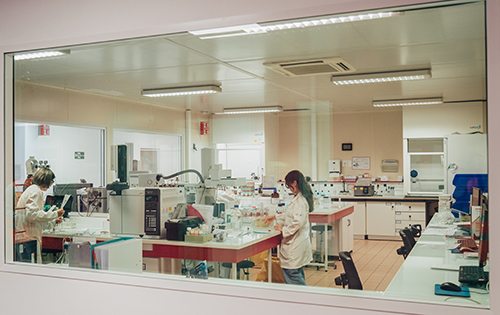
Transform data and byproducts from bioprocesses into drivers of performance, sustainability, innovation in healthcare, and self-sufficiency.
The VALBIOS Chair, funded by BIOCODEX under a sponsorship agreement, is committed to balancing digital transformation, circular economy practices, and talent development to foster a more efficient and sustainable bioprocess industry.
The approach developed is resolutely collaborative. It involves a dedicated team of four full-time equivalents, doctoral students, and interns, and draws on the facilities at UniLaSalle Amiens, notably the MakerSpace—a FabLab dedicated to project-based learning—and the Usine École, which focuses on hands-on training in Industry 4.0.
Work progresses iteratively, through successive prototypes and proofs of concept. In keeping with the spirit of patronage, the project is conducted in the public interest, and its scientific findings are intended to be made public.
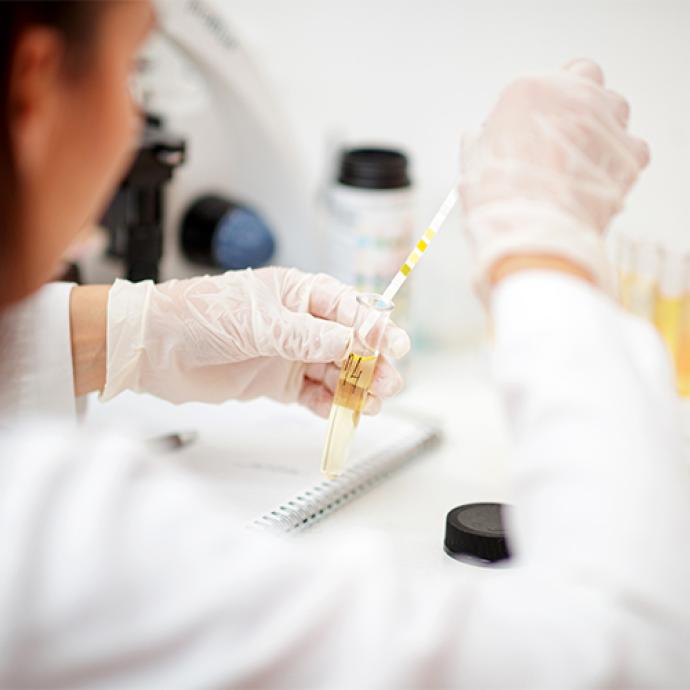
The VALBIOS Chair combines UniLaSalle’s scientific expertise with BIOCODEX’s industrial experience to advance the bioprocesses of the future through digital transformation, the circular economy, and talent development. As part of an initiative serving the public interest, it fosters exchanges between academic research and the business world. It is based on close collaboration between two organizations with deep historical roots in the Beauvais region
Depending on the topics being developed, the Chair may welcome other industrial and academic partners, selected by mutual agreement.
About Our Partners
BIOCODEX
Biocodex is an independent French pharmaceutical company with a presence in more than 100 countries through its subsidiaries and partners. As a pioneer in the study of the gut microbiome, it has made this a central strategic focus, convinced that this ecosystem is key to overall health.
The Group develops innovative healthcare solutions across four complementary areas:
- the microbiome,
- women’s health,
- rare diseases,
- and established products addressing common health needs (mental health, sleep, pain, etc.).
True to its family-owned heritage, Biocodex upholds a committed vision of health, combining scientific excellence, a strong industrial presence in France, international reach, and social responsibility—a commitment that has earned the company the “Engagé RSE” label at the “Confirmed” level (★★), issued by AFNOR Certification and recognized across Europe through Responsibility Europe. “Empowering everyone to live fully” is its mission, driven by its 1,900 employees worldwide.
Its historic and main manufacturing site has been located in Beauvais since 1968. This is where its probiotic yeast-based medications are developed, produced, and packaged, thanks in part to one of the largest freeze-drying platforms in the pharmaceutical industry. BIOCODEX combines scientific rigor, industrial autonomy, and social responsibility.
UniLaSalle
Drawing on the history and values of the prestigious engineering schools and the veterinary school from which it originated, the UniLaSalle Polytechnic Institute is positioned at the intersection of the energy, digital, and ecological transitions.
The UniLaSalle Group comprises four campuses (Amiens, Beauvais, Rennes, Rouen), nearly 4,000 students, more than 22,000 alumni, five research units, and a dozen teaching and research chairs, as well as innovation platforms such as the MakerSpace and the Usine École. UniLaSalle offers degree programs from post-baccalaureate through doctoral levels, in collaboration with its partner universities.
The VALBIOS Chair draws on the expertise of the GeNumEr and Aghyle research units. Through its research serving businesses, industries, and regions, and through its educational programs, UniLaSalle is committed to working together to build a more humane, fairer, and more sustainable world.