The GeNumEr (Geosciences, Digital Technology, and Energy) research unit operates within a scientific and societal context marked by accelerating climate change, growing pressure on natural resources, the energy transition, and the digital transformation of industrial and regional systems. At the international and European levels, the guidelines set forth in IPCC reports, the Paris Agreement, and the European Green Deal, as well as the priorities of the Horizon Europe and Marie Skłodowska-Curie Actions programs, necessitate a profound shift in production methods, resource management, and regional planning.
At the national level, the National Low-Carbon Strategy (SNBC), the Territorial Climate-Air-Energy Plans (PCAET), and the challenges of energy and mineral sovereignty reinforce the need for robust scientific tools to analyze, model, and anticipate environmental, industrial, and energy trajectories.
In this context, GeNumEr positions itself as a unit with high scientific added value, capable of integrating geosciences, digital technology, and energy to generate fundamental knowledge while developing operational decision-support tools. The unit relies on an integrated and multidisciplinary approach to understand natural and technological systems, adapt methods to environmental and territorial constraints, and predict their future evolution.
History of the GeNumEr Unit
GeNumEr was formed through the merger of B2R, SYMADE, and the digital sciences to address, through an interdisciplinary approach, the major current challenges of energy transition, resource sustainability, and the modeling of complex systems.
These three complementary entities have developed recognized expertise in their respective fields:
- B2R (Basins, Resources, and Reservoirs) was built around geosciences applied to the study of sedimentary basins, geological reservoirs, and natural and energy resources. Its work has greatly contributed to the understanding of complex geological systems and their sustainable exploitation.
- SYMADE (Systems, Materials, and Development) specializes in the analysis of energy and industrial systems, process performance, and the integration of environmental constraints into development and optimization strategies.
- Activities in digital sciences, meanwhile, have developed cross-disciplinary expertise in modeling, simulation, data processing, artificial intelligence, and advanced digital tools, which have become essential for leveraging big data and predicting complex systems.
The challenges facing the GeNumEr unit
The challenges facing the GeNumEr unit are to understand and model geological systems in order to meet the challenges of the energy and environmental transition.
It aims to optimize the sustainable exploitation of resources (energy, materials), predict natural risks, and strengthen the resilience of industrial systems.
The unit develops innovative digital tools for the intelligent management of flows and infrastructure.
It supports energy sovereignty and adaptability in the face of global change.
The GeNumEr Scientific Project
The GeNumEr (Geosciences, Digital Technology, and Energy) scientific project is based on an integrated and interdisciplinary approach aimed at understanding, modeling, and improving geological, energy, and industrial systems in the context of ecological transition, pressure on resources, and digital transformation.
- GeNumEr’s research covers, in particular:
- Understanding sedimentary basins, geological reservoirs, and paleoclimate archives;
- Analyzing and predicting natural and environmental risks;
- Optimizing regional and industrial energy systems;
- Developing advanced numerical methods (multiscale modeling, artificial intelligence, digital twins).
These themes directly address the Sustainable Development Goals (SDGs 7, 9, 12, and 13) and the challenges of ecological transition, regional resilience, and industrial competitiveness. They find practical applications through European projects, industrial partnerships, and close collaborations with local and regional governments.
L’unité structure ses recherches autour de quatre axes complémentaires, articulant production de connaissances fondamentales et développement d’outils opérationnels d’aide à la décision.
Area 1 - Development of innovative and experimental methods and multiscale modeling
Key Concepts:
Multiphysics and Multiscale Modeling
Artificial Intelligence, Digital Twins, Data, and Decision Support
Data Acquisition and Fundamental Concepts
- Methodological Foundations: Mathematics, Physics, Statistics...
- Sensors, sensor networks, communication between sensors (IoT)
- Protocols for measurement and transmission of measurement data
Methods for data conceptualization and processing
- Methodological concepts, development of protocols (experimental, virtual), data manipulation
- Data transformations and representation, correlations, and identification of intrinsic properties
- Cryptography, data backup, protection, and security
Multiphysics and multiscale modeling
- Design of hybrid models: multidomain, multiphysics, multiscale, and multi-tool
- Integration of experimentally identified properties into a model
- Management and databases
Area 2 - Dynamics of Geological Flows and Natural Hazards
Key Concepts:
Basin Dynamics and Paleoclimate Records
Natural Hazards and Territorial Resilience
Impact and Structure of a Watershed (Source to Sink)
- Recording of tectonic and climatic parameters
- 3D seismic stratigraphy, seismic geomorphology, and stratigraphic modeling
Multiscale modeling of natural hazards
- Study of territory-specific risks (heat waves, flooding): development of urban digital twins and process modeling (high-resolution field data)
- Monitoring (transport-sedimentation) and the impact of microplastics
- Depletion of resources (industrial and natural): development of renewable resources
Role of faults and fractures
- Relationships between deformation, burial, fluids, and associated mineralization
- New resources: energy and minerals
Area 3 - Resource and Energy Management and Sustainable Development
Key Concepts:
Geothermal energy, CO₂ storage, hydrogen, critical metals
Responsible resource management and low-carbon systems
Multiple Geological Resources
- Resource Characterization: Critical Materials, Energy, Gas
- Reservoir Recharge, Storage (CO2, etc.), Treatment (brine, etc.)
- Economic and Societal Monitoring
Materials and Components for Electrical Engineering
- Materials for Electrical Engineering (magnetic, conductive, insulating, dielectric, multiferroic, storage materials, etc.)
- Eco-responsible material processing and assembly methods
- Integration of materials with optimal efficiency into the eco-design of components and machines
Electric power systems—energy mix
- Multi-source microgrid / integration of distributed generation, renewable energy, storage, etc. (real-time platform)
- Interfacing of distributed generation and renewable energy via power electronics and converters
Area 4 - Efficiency and Industrial Intelligence
Key Concepts:
Energy Optimization and Industrial Systems
Regional Applications and Socioeconomic Partnerships
Multidisciplinary Data
- Efficient and secure deployment of sensors and actuators
- Energy-efficient and eco-friendly control and storage processes, cloud-based/big data databases, connected devices
- Study and analysis of functional requirements and specifications
Modeling and design
- Process modeling (fluid mechanics, thermodynamics, bioprocesses) and specialized machinery / mechatronics / robotics
- Data modeling and processing to improve industrial performance through the creation of digital twins
- Innovation—design, virtual prototyping, commercialization through patents
Supervision and industrial applications
- Process control and regulation (automation, control systems, etc.)
- Production control, agile management using artificial intelligence, and the implementation of user-friendly interfaces (BI)
- Optimization, prototyping, proofs of concept
Actualités


A multidisciplinary team of around twenty people
Amiens Campus
- ANDJUI Thérèse - Associate Professor
- BENZAOUIA Mohammed - Associate Professor
- BRACQ Adrien - Research Engineer
- CHIVOT Guillaume - Associate Professor / Expertise in Materials and Physics
- COPPIER Hervé - Associate Professor (HDR)
- DAILLY Nicolas - Associate Professor
- DEWAGHE Laurent - Associate Professor / Expertise in Mathematics
- DUJANY Arnaud - Associate Professor
- DUPONT Prescillia - Associate Professor / Expertise in Electrical Engineering
- FIOLET Thomas - PhD student
- GOMEZ Sébastian - Research engineer
- GORIN Jérôme - Associate Professor
- LALEB Sonia - Associate Professor
- LECLERCQ Maximilien - Associate Professor / Expertise in Automation
- MALOBERTI Olivier - Associate Professor / Expertise in Materials and Physics
- MPANDA Augustin - Professor Emeritus / Expertise in Electrical Engineering
- NESSER Manar - Associate Professor / Expertise in Materials and Physics
- POMPORTES Stéphane - Associate Professor
Beauvais Campus
- ARAUJO Hamilton - Associate Professor
- BAILLEUL Julien - Associate Professor / Expertise in basin geology (HDR)
- BARRIER Pascal - Associate Professor /Expertise in Microfacies Sedimentology (HDR)
- BONHOURE Jessica - Associate Professor
- CHENOT Élise - Associate Professor / Expertise in Sedimentology
- FERIKH Nabil - PhD student
- FONTANELLI Laurent - Associate Professor
- FORTIN Jérôme - Project Development Manager / Mechanical Engineering Expertise (HDR)
- GAGNAISON Cyril - Associate Professor / Expertise in Paleontology
- JEAN VICTOR Julien - PhD student
- LAURENT Aurore - Postdoctoral researcher
- LAURENT-CHARVET Sébastien - Associate Professor
- LE BIVIC Réjanne - Associate Professor
- LIEUNARD Victor - PhD student
- OTTAVI-PUPIER Elsa - Associate Professor
- PAISNEL Damien - Technician / Expertise in Lithopreparation
- PARIZE Olivier - Professor Emeritus (HDR)
- POTEL Sébastien - Associate Professor /Expertise in low-temperature (LT) metamorphism petrology (HDR)
- PROUDHON Benoit - Associate Professor
- TOULLEC Renaud - Associate Professor / Expertise in carbonate sedimentology
- TRULLENQUE Ghislain - Associate Professor / Expertise in Structural Geology (HDR)
- VANDENHAUTE Rafael - Technician
- VAUTIER Yannick - Associate Professor
Current projects
Horizon Europe MSCA Doctoral Networks MININGBRINES Project
Funding for 19 doctoral scholarships on understanding the natural processes leading to the presence of resources in geothermal brines, developing environmentally friendly biogeochemical extraction solutions, and using AI algorithms to assess the economic potential and social perception of resource exploitation.
Completed projects
Railconnect Project
Conductive materials and sliding electrical contacts
ESSIAL Project
Design and integration of new laser-treated materials, H2020
RITHME Project
Thermally conductive insulating tapes.
AAP ANR-France Relance 2022 project
COILTIM and TIMAG Projects
Design and integration of new materials treated by magnetic pulses.
AAP ANR France Relance 2022 projects
Horizon 2020 MEET Project
Use of Enhanced Geothermal Stimulation (EGS) in various geological contexts, enabling the safe and profitable production of virtually inexhaustible renewable energy while ensuring low environmental impact.
Platforms
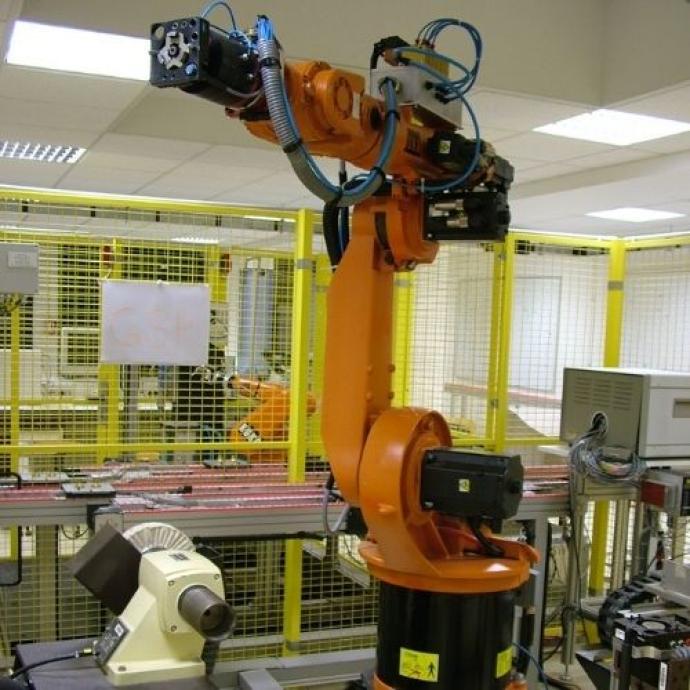
- Apex (Beauvais Campus)
- MakerSpace (Amiens Campus)
- SMARTGRID (Amiens Campus)
- Geosciences (Beauvais Campus)
- Factory School (Amiens Campus)
Networks and partners
Academic partners
- University of Lille,
- University of Picardie Jules Verne,
- University of Florence & University of L'Aquila - Department of Industrial and Information Engineering and Economics (IT),
- Carlos III University of Madrid (SP),
- Technical University of Cluj-Napoca (RO),
- UBC– Vancouver (CA),
- Paul Sabatier University of Toulouse,
- Institute of Human Paleontology of Paris,
- IFP Énergies Nouvelles,
- National Museum of Natural History of Paris,
- University of Montpellier 2,
- University of Nice-Sophia Antipolis,
- University of Rennes,
- University of Frankfurt am Main & University of Darmstadt & University of Freiburg & Karlsruhe Institute of Technology & University of Potsdam (DE),
- University of Genoa (IT),
- University of Nevada, Reno & University of Texas at El Paso,
- North Carolina State University (NCSU) & University of Akron & IFU Miami (US),
- University of Waikato, Hamilton & National Institute for Water and Atmospheric Research, Wellington & Geological and Nuclear Sciences, Lower Hutt (NZ),
- Geological Survey of Western & Kalgoorlie (Aus),
- University of Yaoundé 1 (Cam)
Institutional and industrial partners
- MEDEE Cluster,
- IRT Innovaltech,
- IRT M2P,
- ENEDIS Amiens,
- JEUMONT Electric,
- CRM Group,
- EREA – Transformers,
- VALEO,
- Fraunhofer IPT,
- BASIS EP,
- SICAE de la Somme,
- H2AIR
- SIAAP
- KUHN
- CEEBIOS
- IKOS